

In the aesthetics of the 1950s and 1960s, the heyday of mid-century modern style, lighting was designed with extraordinary boldness and attention to form. Lamps from that era were not just light sources but autonomous, sculptural works of art.
Wondering which shapes to choose for your home and how to arrange light points to create a cohesive, atmospheric arrangement? Learn how to choose pendant lamps, floor lamps, and table lamps that will warm your home and add a unique charm.
The Role of Light in Creating a Retro Atmosphere
When decorating a living room, we often face a dilemma: what lighting should we choose for a living room that is both functional and atmospheric? The most common mistake is relying solely on a single, central pendant lamp. This lighting method flattens the space, creating harsh shadows and detracting from the interior's coziness.
In retro style, the key to success is multi-point lighting. Light should be diffused, soft, and filtering from several different areas of the room. When planning the arrangement, we must carefully consider how to choose lighting for the living room to harmonize with its functional layout. Warm twilight in the reading nook, a subtly illuminated oak chest of drawers, and a hanging lamp above the dining table – these varied pools of light create depth and make the room look captivating in the evening, inviting you to relax after a long day.
Iconic Lamp Forms from the 1950s and 1960s
Lighting design in the mid-20th century was characterized by extraordinary creativity. Designers experimented with new materials, such as bent metal, plastic, and opal glass, creating forms that remain captivating and are eagerly copied today.
The most important lighting classics worth inviting to a retro living room include:
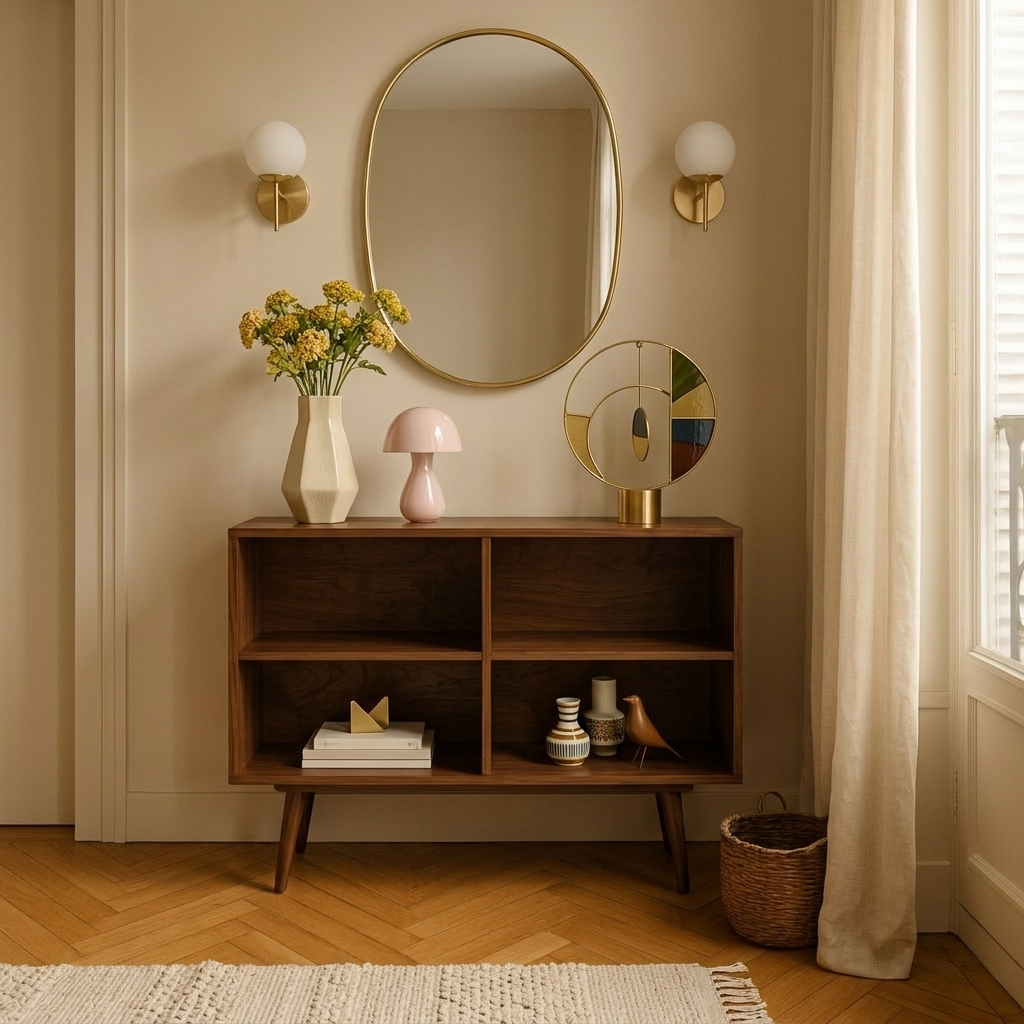
Mushroom lamps: They feature a rounded, domed shade made of metal or frosted glass that directs light downward. Tabletop versions of these lamps look stunning on wooden dressers or sideboards.
Glass globes: Hanging lamps consisting of one or more opal glass globes suspended from brass or black arms. They provide an exceptionally soft, diffused light.
Floor lamps with an arched arm: They allow you to illuminate, for example, a coffee table without having to install a ceiling lamp in that specific place.
How to choose pendant and floor lighting for functional areas?
Each area in the living room requires a different type of lighting. Above the dining table, it's best to hang a ceiling lamp with an open-down shade that illuminates the tabletop without blinding those seated at the table. A metal floor lamp with an adjustable shade should be placed in the living area, next to a comfortable armchair, perfect for reading in the evening.
Smaller table lamps with frosted glass shades are also recommended for use on the tops of low dressers and bookcases. When turned on, they will illuminate their entire surface, creating a warm, decorative glow. Bring the same cozy, diffused light to the bedroom by placing designer table lamps on retro wooden nightstands. This approach will give the entire apartment a cohesive, sophisticated feel, and the bedroom will become an oasis of peace and intimacy.
Practical Tips – Color, Power, and Light Control
Even the most beautiful lamp won't fulfill its purpose if you choose the wrong bulb. In a vintage living room, absolutely avoid bulbs with a cool or neutral color temperature (above 3000 Kelvin). Cool light is associated with offices and laboratories, destroying the coziness of a home.
Choose light sources with a warm color temperature – preferably 2700 Kelvin, or even warmer decorative Edison bulbs (around 2200 Kelvin), which emit a pleasant, amber light reminiscent of candlelight. Also, pay attention to the light output. Because many lamps are used simultaneously in a vintage living room, none of them need (or even should) be on at full, blinding brightness. It's worth investing in dimmer systems that allow for smooth adjustment of light intensity depending on the time of day and mood.
Combining classic lighting with modernity
Vintage style doesn't mean sacrificing modern technological conveniences. Modern smart home systems and smart LED bulbs work perfectly with retro fixtures. You can easily program mood lighting to automatically turn on at dusk or control it via an app.
The key is to conceal modern technology within a classic form. A gold and brass chandelier with frosted globes or a 1960s metal floor lamp equipped with a modern, energy-saving, warm-colored LED bulb are the perfect blend of the past and the future. This will make your living room not only beautiful and atmospheric, but also functional and energy-efficient in everyday use.
FAQ
What lighting should you choose for a retro-style living room?
It's best to opt for a multi-point solution and choose a combination of a pendant lamp with frosted globe shades, a metal floor lamp with an adjustable arm in the reading nook, and smaller table lamps (e.g., mushroom lamps) placed on dressers.
How to choose lighting for a mid-century modern living room?
The light should be warm and diffused. Divide the room into zones and choose a separate, low-intensity light source for each. Avoid a harsh, central ceiling light in favor of side floor and table lamps.
What color temperature is best for vintage interiors?
It's essential to choose a warm light color with a temperature of 2700 Kelvin. For purely decorative lamps, you can use retro Edison bulbs with a temperature of 2200 Kelvin, which create an atmospheric, amber glow.
Where to place a floor lamp in a living room?
It's best placed next to a lounge chair or sofa, creating a comfortable reading area. A floor lamp also works well in a dark corner of the room, helping to visually enlarge and warm the entire space.
What materials dominate lamps from the 1950s and 1960s?
The most important materials are brass and lacquered metal (often in striking retro colors), opal glass that diffuses light, and organic details crafted from natural wood.